What Does “Nuance” Mean in Human Communication
You’ve probably typed a “quick note” to a direct report and then paused before hitting send, because the same sentence can either feel supportive or cutting. That extra meaning is nuance: the signals layered on top of the literal words. It includes what you both remember from past conversations, the power gap between manager and employee, and whether the moment is tense or routine. “Can you jump on this today?” lands differently after praise than after a missed deadline.
In workplace writing, nuance often lives in what’s implied but left unsaid—urgency without panic, firmness without shame, empathy without over-apologizing. AI can draft clean sentences, but it won’t automatically know which unspoken layer your team will hear, and that’s where misunderstandings start.
Language Beyond Words: Context, Culture, and Emotion
Those misunderstandings usually don’t come from “bad grammar.” They come from everything surrounding the sentence: why you’re writing now, what just happened on the project, and what your relationship has looked like lately. A reminder that’s fine in a calm week can feel like a warning right after a tense 1:1.
Culture matters, too. Some teams read directness as clarity; others hear it as impatience. “Please advise” can sound neutral in one workplace and stiff or distancing in another. Even simple choices like “Hey” versus “Hi” can carry signals about closeness, status, or urgency, especially across regions, generations, or remote teams.
Emotion is the hardest layer to outsource. If someone is anxious, burnt out, or embarrassed, a polished draft can land cold. AI can’t reliably infer how a specific person will feel today from a prompt, which raises a bigger question about what it’s actually doing when it writes.
Pattern Recognition vs True Understanding in AI
In practice, AI writes the way autocomplete feels when it’s on a good day: fast, fluent, and usually “reasonable.” It does that by matching patterns from the text it has seen to the text you’re asking for. If you prompt, “Write a calm performance reminder,” it will pull from common templates that sound calm on paper.
But that’s not the same as understanding why your reminder is hard to send right now. It doesn’t know that Jordan has been staying late all week, that your last message came off sharp, or that “just circling back” is a phrase your team jokes about. So it may produce language that fits the category while missing the moment.
Managers often paste a draft and ship it because it reads “professional.” In higher-stakes notes—missed deadlines, conflict, compensation—treat AI output as a rough draft and check what it implies before you hit send.
The Challenge of Interpreting Tone and Intent

That “check what it implies” step gets tricky when the message sounds fine, but the tone doesn’t match your intent. A model can produce a crisp, neutral paragraph and still miss the difference between “I’m trying to help” and “I’m documenting a problem.” If you’re writing to someone who already feels watched, a line like “For visibility, please provide an update by EOD” can read like a threat, even if you meant coordination.
Tone also rides on tiny choices that look interchangeable to a tool. “Just” can soften (“Just a quick check-in”) or dismiss (“Just follow the process”). “Actually” can sound like correction. Even “Thanks in advance” can land as pressure when the person is overloaded. The intent in your head—encouraging, firm, curious—often depends on shared history that isn’t in the prompt.
You’re the least reliable judge of how your own draft will land, because you know what you meant. For anything sensitive, read it as the employee: What am I being asked to do, and what happens if I don’t? If the implied consequence feels harsher than you intend, rewrite in your own voice before sending.
Ambiguity and Multiple Meanings in Natural Language
That “implied consequence” often hides inside words that can mean two things at once. In a workplace note, “Let’s sync” might be a helpful reset, or it might signal “this is serious.” “Circle back” can mean “when you have a minute” or “you dropped the ball.” Even timelines carry ambiguity: “by end of day” sounds clear until the recipient wonders whose time zone, which workday, and whether “end” means 5 p.m. or midnight.
AI tends to pick the most common reading, not the one your team has learned to expect. If your culture uses “quick” as code for “urgent,” a draft that says “a quick favor” can quietly raise pressure. Extra back-and-forth, defensiveness, or a Slack thread trying to decode what you meant.
When the language has multiple plausible meanings, assume the model will miss the local one—and watch where it smooths over details that people treat as signals.
When AI Misses Subtle Signals or Overgeneralizes
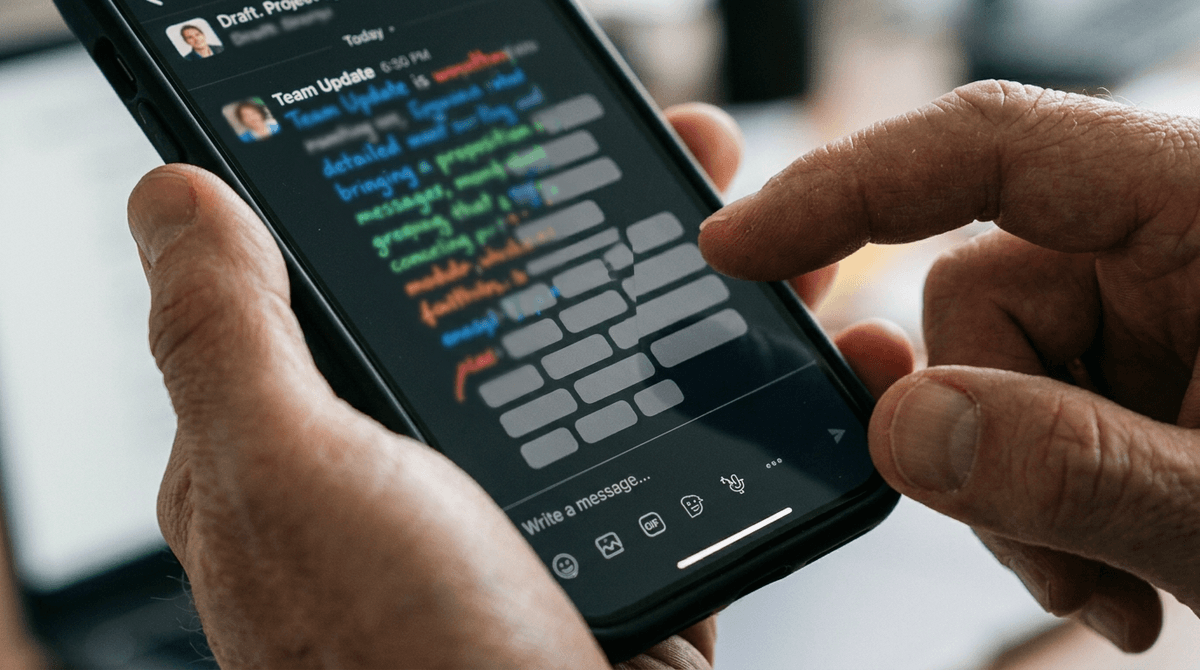
That smoothing is where managers get burned: the draft looks “clean,” but it quietly strips out the specific signals your team relies on. AI often overgeneralizes into safe-sounding corporate language—“touch base,” “for visibility,” “align on expectations”—and the message starts to read like a policy memo instead of you. If the employee is already tense, that shift alone can feel like you’re escalating.
It also misses small, local cues. If your team uses humor to lower pressure, a straight rewrite can turn a gentle nudge into a cold correction. If there’s a known power dynamic—new hire, visa concern, recent PIP rumors—phrases like “please confirm” or “send me proof” can land as distrust, even when you meant logistics.
You can’t prompt your way out of missing history. Use AI for structure, then scan for: implied consequences, formality spikes, and any line that could be read as documenting a problem.
How Humans Can Communicate More Effectively With AI
That scan becomes easier when you treat your prompt like a brief, not a vibe. Paste the draft context you’d give a trusted peer: what happened, what you want the person to do, and what you want them to feel after reading it (“clear, not scolded”). Then ask for two versions: “warm and direct” and “firm with empathy,” and pick the one that sounds like you.
Before sending, run a quick stress test: Which line could sound like a warning? What consequence is implied? Replace fuzzy timing (“EOD”) with specifics (“by 3 p.m. PT today”). The more sensitive the topic (performance, conflict, pay), the more you’ll need to rewrite in your own voice anyway.